PRP Hair Restoration in Port Saint Lucie: What Actually Works
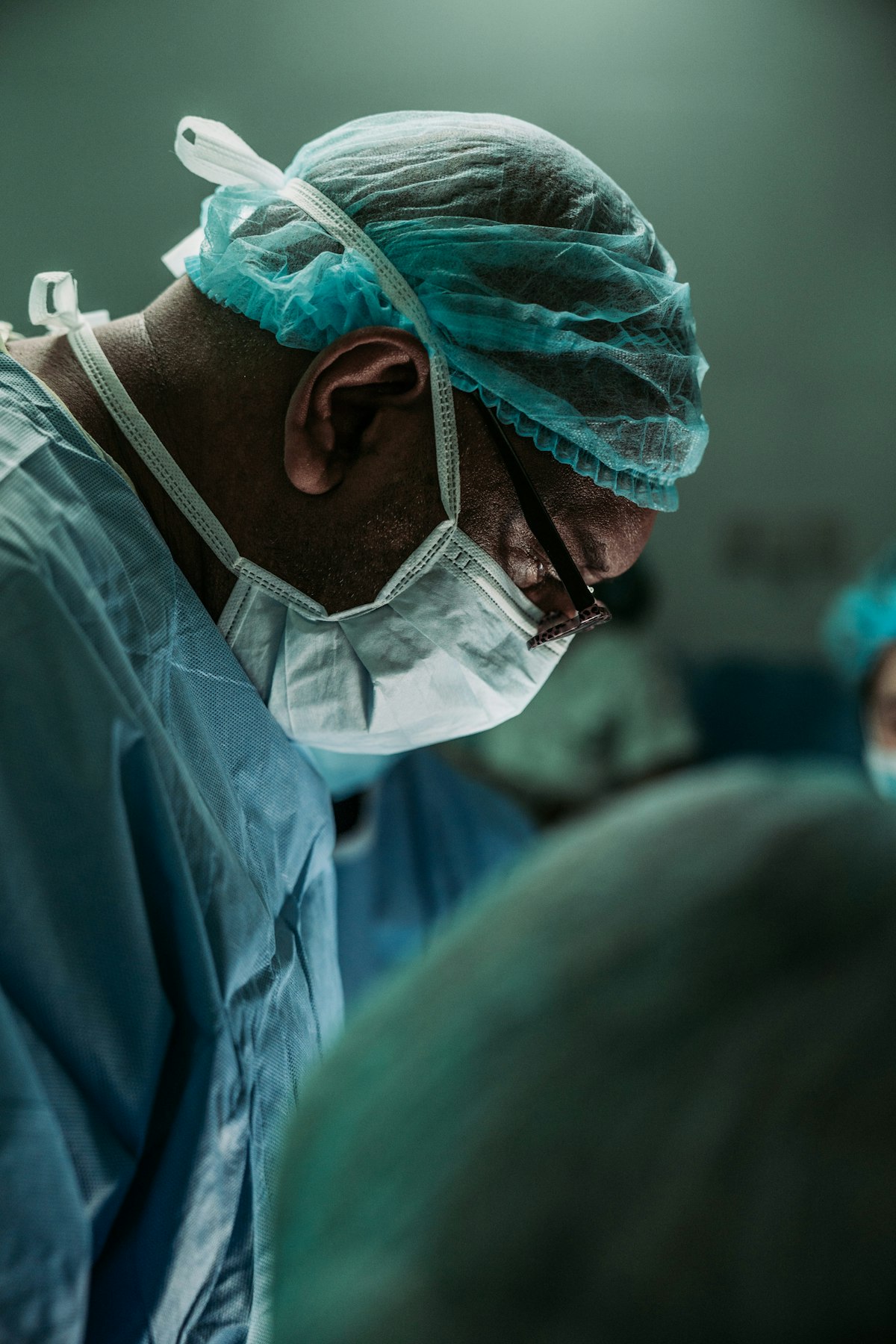
A Port Saint Lucie clinician's guide to PRP hair restoration - how platelet-rich plasma actually works on the scalp, who is a good candidate versus who is not, what a real three-session series looks like, how PRP pairs with minoxidil, finasteride, and hormone therapy, and honest cost expectations for adults on the Treasure Coast.

Hair loss is one of the most common reasons patients walk into AVAANDI MedSpa in Port Saint Lucie, and it is also one of the most over-promised categories in aesthetics. Platelet-rich plasma — PRP — sits in the middle of the conversation because the science is real, the mechanism is well described, and the results, when patients are matched correctly, can be meaningful. PRP is not a hair transplant, not a one-time fix, and not the right tool for every pattern of loss. This guide explains what PRP does, who benefits, what a real series looks like on the Treasure Coast, and the honest limits of the treatment.
What PRP is — and what it isn't
PRP is your own blood, processed in a clinical centrifuge to concentrate the platelets and the growth factors they carry, then reintroduced into the scalp at the level of the hair follicle. The active ingredients are proteins — platelet-derived growth factor (PDGF), vascular endothelial growth factor (VEGF), epidermal growth factor (EGF), and insulin-like growth factor (IGF-1) — that signal nearby follicles to extend their growth phase and improve blood supply to the follicle bulb.
What PRP is not: it is not a transplant, it does not move follicles from one part of the scalp to another, and it does not create new follicles in scarred or fully bald areas. Follicles that have completely miniaturized away are not coming back from a PRP injection. Patients who arrive expecting a hair transplant's coverage from a PRP series will be disappointed, and we would rather have that conversation at the consult than three months in.
How PRP actually works on the scalp
Every hair on your head moves through a three-phase cycle. The anagen phase is active growth, lasting anywhere from two to seven years depending on genetics. Catagen is a brief transition phase of about two weeks. Telogen is the rest and shed phase, lasting around three months, after which the follicle re-enters anagen and starts a new hair. Most adults shed 50 to 100 hairs a day, which is normal — visible thinning starts when the ratio between anagen follicles and telogen follicles shifts, which is exactly what happens in androgenetic alopecia (the genetic, hormone-mediated pattern of loss that affects both men and women).
PRP's growth factors push follicles into and through the anagen phase, slow the conversion to telogen, and improve the vascular supply that keeps follicles fed. The American Academy of Dermatology recognizes androgenetic alopecia as the most common cause of hair loss in both sexes, and recent systematic reviews — including the mechanism work by Gupta and Carviel in Dermatologic Surgery (2016) — describe PRP as a clinically reasonable adjunct, particularly in early to moderate cases where follicles are miniaturizing but still alive.

Who is a good candidate — and who isn't
The most important conversation in a PRP hair consultation is candidacy. PRP works best on follicles that are alive and miniaturizing — not follicles that are already gone. That distinction usually maps to early to mid-stage androgenetic alopecia, diffuse thinning along the part line or crown, post-pregnancy or post-stress shedding (telogen effluvium), and patients already on minoxidil or finasteride who want to layer PRP on top.
PRP alone is unlikely to help patients with a fully smooth scalp where follicles are visibly gone, scarring forms of alopecia (lichen planopilaris, frontal fibrosing alopecia), advanced Norwood VI–VII pattern loss in men, advanced Ludwig III pattern loss in women, or any case where untreated thyroid disease, iron deficiency, or another internal cause is driving the shedding. We screen for all of those before booking a series — running PRP without ruling out medical drivers wastes the patient's money and delays the actual fix.

What a real PRP series looks like in our Port Saint Lucie clinic
A typical PRP hair series at AVAANDI is three sessions spaced four to six weeks apart, followed by a maintenance session every four to six months once the active phase is complete. Each session takes about an hour. We draw 15 to 30 milliliters of blood from the arm, spin it in a closed-system centrifuge for roughly ten minutes to separate the platelet-rich layer, and inject the concentrate into the scalp across the thinning zones using a fine needle. A topical anesthetic applied thirty minutes beforehand keeps the injections at a brief pressure rather than sharp pain.
You can return to normal activity the same day. Avoid alcohol the night before, avoid NSAIDs (ibuprofen, naproxen) for a week before and after because they interfere with the platelet healing cascade, and skip aggressive scalp products or heat styling for 24 to 48 hours. Mild tenderness for a day or two is normal. The first new growth typically shows around the third or fourth month — patients who give the protocol six months almost always have something measurable to look at.
How PRP fits alongside the other hair-loss tools
PRP is most effective when it is not the only thing you are doing. The patients we see with the most durable improvement combine PRP with daily topical minoxidil (5% for men, 2 or 5% for women), an oral finasteride or dutasteride prescription where appropriate, supplementation for documented iron, vitamin D, or zinc deficiency, and — in women — a thoughtful look at thyroid and reproductive hormone balance, since perimenopausal hormonal shifts are one of the most under-diagnosed drivers of female-pattern thinning. Our hormone therapy for women protocols address that axis directly, and PRP layered on top often outperforms PRP alone because we are fixing both the follicle environment and the systemic signal at once. PRP also pairs naturally with the rest of our regenerative medicine toolkit — hair, hormones, and inflammation move together, and treating one axis in isolation often leaves results on the table.
Cost, candidacy, and what to expect from your consult
PRP scalp pricing in Port Saint Lucie at AVAANDI runs $750 to $1,000 per session as our currently published range. A standard three-session series paid up front typically lands a discount versus session-by-session pricing; maintenance sessions after the initial protocol are billed individually. Insurance does not cover PRP for hair restoration anywhere in the U.S., but we provide itemized receipts you can submit for HSA or FSA reimbursement, and we offer financing options for the full series. Current published treatment pricing is on our pricing page; your in-clinic consult will refine the actual quote.
The first visit is not an injection day. We start with a scalp evaluation under magnification, review your medical history and current medications, and order blood work (CBC, ferritin, vitamin D, thyroid panel, and — in women — a reproductive hormone panel where indicated). From there we build a plan that often includes PRP, frequently includes a topical or oral adjunct, and sometimes — when labs come back with a clear medical driver — pauses PRP until that is addressed. Spending $2,500 on a PRP series for a patient who is actually losing hair from untreated hypothyroidism is a bad clinical outcome regardless of how good the technique is. We would rather identify that on day one, treat the underlying driver, and revisit PRP six months later on a corrected baseline.
Ready to find out if you are a candidate?
If you are noticing more shed in the shower, a wider part line, or a hairline that has started to retreat, the right next step is not to buy three more shampoos — it is a clinical consult that rules out the medical drivers and tells you whether PRP is the right tool for your case. Call (772) 742-2111 or book a consultation online to see Dr. Andrea Lewis-Walker and the AVAANDI MedSpa Clinical Team at our Port Saint Lucie clinic (1801 SE Hillmoor Dr., Suite C103, Port Saint Lucie, FL 34952). We will evaluate, we will be straight with you about what PRP can and cannot do for your pattern, and if we think you would waste your money — we will tell you that too.
Written by the AVAANDI MedSpa Clinical Team. This article is general educational information about PRP hair restoration and is not a substitute for an in-person evaluation. Outcomes vary; PRP is not appropriate for every patient or every pattern of hair loss. Consult a qualified medical provider before starting any new treatment.
Frequently Asked Questions
How many PRP sessions do I need for hair restoration, and how long until I see results?
The standard starting protocol at AVAANDI is three sessions spaced four to six weeks apart, followed by a maintenance session every four to six months. The earliest visible changes — less shedding, then small new growth at the hairline or part line — typically appear at the three- to four-month mark. Patients who expect results at four weeks will be discouraged; the growth-factor cascade and the hair cycle take time. We schedule progress photos at four months and seven months to track the trajectory honestly.
Does PRP for hair hurt, and what is the downtime?
Most patients describe PRP injections to the scalp as a brief pressure rather than sharp pain. We apply a topical anesthetic about thirty minutes before the procedure to take the edge off. Downtime is minimal — you can go back to work the same day. Expect mild scalp tenderness, occasional tightness, or pinpoint redness for 24 to 48 hours. Avoid NSAIDs (ibuprofen, naproxen) for a week before and after, avoid alcohol the night before, and skip aggressive scalp products and heat styling for a day or two after.
Is PRP safe — and are there people who should not do it?
Because PRP uses your own blood, allergic reactions are essentially absent and infection risk is very low with clean technique. That said, PRP is not appropriate for patients with active cancer, active scalp infection or dermatitis, certain bleeding disorders, pregnant or breastfeeding patients, or patients on anticoagulant medications (the last one is a case-by-case clinical judgment with the prescribing physician). Scarring alopecia is a medical condition that needs dermatologic management — PRP is not the right tool there.
Can I do PRP at the same time as minoxidil, finasteride, or hormone therapy?
Yes, and in most of our cases it is the combination that produces the best result. PRP works on the local follicle environment; minoxidil works on the same axis from a different angle; finasteride works on the hormonal driver in men; thoughtful estrogen or thyroid optimization works on the systemic driver in women. We treat hair loss as a multi-axis problem and design the plan that way. Tell your AVAANDI provider every prescription and supplement you are taking — we coordinate with prescribing physicians whenever the picture warrants it.
How much does PRP hair restoration cost in Port Saint Lucie?
Our currently published PRP scalp pricing runs $750 to $1,000 per session, with a typical three-session series paid up front qualifying for a series discount. Maintenance sessions after the initial protocol are billed individually. Insurance does not cover PRP for hair restoration anywhere in the U.S., but we provide itemized receipts you can submit for HSA or FSA reimbursement, and financing options are available. Call (772) 742-2111 for a specific quote after your consult.
Related Services at AVAANDI MedSpa
Ready to Get Started?
Schedule a consultation at AVAANDI MedSpa in Port Saint Lucie. No referral required.
📍 1801 SE Hillmoor Dr., Suite C103, Port Saint Lucie, FL 34952 · www.avaandi.com